- Fertility & Women’s Wellness
- +91-9082745079
- lifefertilitycentre.nh@gmail.com
IVF Treatment Process Step-by-Step: What to Expect During Your First IVF Cycle
Expert Fertility Guidance — Life Fertility Centre, Mumbai
Introduction
Starting your first IVF cycle can bring a mix of hope, questions, and uncertainty. Many couples want to understand what happens at each stage, how long the process takes, and what they should expect during treatment.
IVF, or in vitro fertilisation, is a fertility treatment where eggs and sperm are combined in a laboratory to create embryos, which are then transferred into the uterus.
Understanding the IVF treatment process can help you prepare better for appointments, medications, procedures, and important decisions throughout your fertility journey.
For couples considering IVF Treatment in Mumbai, choosing an experienced fertility team can help you receive personalized guidance based on your medical history, fertility concerns, and treatment goals.
Pregnancy Back Pain Video
IVF Process: कैसे होता है Step-by-Step Guide
How to manage back pain in pregnancy?
What Is IVF Treatment?
IVF is an assisted reproductive technology used to help couples achieve pregnancy when natural conception becomes difficult.
During IVF, eggs are collected from the woman's ovaries and fertilised with sperm in a specialised laboratory. The resulting embryos are monitored for development, and a suitable embryo is transferred into the uterus.
IVF may be recommended for conditions such as:
Every couple has a different fertility history. A fertility specialist first evaluates your reports and health factors before recommending IVF.
IVF Cycle Timeline: How Long Does the Process Take?
A complete IVF cycle usually takes around 3 to 6 weeks, depending on the treatment plan. The timeline may include:
| IVF Stage | Approximate Duration |
|---|---|
| Fertility consultation and testing | Before starting the cycle |
| Ovarian stimulation injections | Around 8 to 12 days |
| Egg retrieval | Around day 12 to 14 |
| Fertilisation and embryo development | 3 to 5 days |
| Embryo transfer | Usually day 3 or day 5 after fertilisation |
| Pregnancy test | Around 10 to 14 days after embryo transfer |
Your doctor may modify this timeline depending on your ovarian response, hormone levels, and treatment requirements.
Initial Consultation and Fertility Assessment
The first step of IVF is a detailed consultation with your fertility specialist.
During this appointment, your doctor reviews:
Your doctor may recommend tests such as:
For Women:
For Men:
This stage helps your doctor understand your fertility condition and design a suitable IVF plan. At Life Fertility Centre, fertility evaluation is focused on understanding each patient's individual needs before beginning treatment.
Ovarian Stimulation and Monitoring
In a natural menstrual cycle, usually one egg matures. During IVF, fertility medicines are used to encourage the development of multiple eggs. These medicines are usually given through injections for several days.
The purpose of ovarian stimulation is to increase the chances of collecting mature eggs suitable for fertilisation.
During this phase, you will have regular monitoring appointments that may include:
Your doctor adjusts medication doses depending on how your ovaries respond. Some women may experience:
These changes are usually monitored by your fertility team throughout the stimulation process.
Egg Retrieval Procedure
Once the eggs reach the required maturity, your doctor schedules egg retrieval. Egg retrieval is a short procedure performed under appropriate pain relief or sedation.
During the procedure:
The procedure generally takes around 20 to 30 minutes. After egg retrieval, you may experience mild cramps, bloating, or pelvic discomfort for a short time.
A common question patients ask is: "Does the number of eggs retrieved decide IVF success?"
The answer is no. The quality of eggs, sperm quality, embryo development, uterine health, and several other factors influence IVF outcomes.
Fertilisation and Embryo Development
After egg collection, the eggs are taken to the laboratory for fertilisation. There are two common approaches:
In this process, prepared sperm are placed with eggs in the laboratory to allow fertilisation naturally.
In some cases, doctors recommend Intracytoplasmic Sperm Injection (ICSI), where a single sperm is injected directly into an egg. ICSI may be considered when there are sperm-related fertility concerns or previous fertilisation difficulties.
After fertilisation, embryos are monitored for growth. Embryologists assess:
Some embryos may develop until the blastocyst stage, which usually occurs around day five.
Embryo Transfer
Embryo transfer is the stage where the selected embryo is placed inside the uterus. The procedure involves:
The procedure is usually quick and does not require surgery. Your doctor decides the number of embryos to transfer based on factors such as:
Many clinics prefer transferring a suitable single embryo whenever possible to reduce the risk of multiple pregnancy. Some embryos may be frozen for future use through frozen embryo transfer.
Waiting Period and Pregnancy Test
After embryo transfer, patients usually wait around 10 to 14 days before taking a pregnancy test. This period can feel emotionally challenging because you may notice symptoms such as:
These symptoms do not confirm pregnancy because fertility medicines can cause similar changes. Your fertility clinic will provide the correct date for pregnancy testing.
If the test is positive, your doctor will guide you through the next steps, including monitoring pregnancy development. If pregnancy does not occur, your fertility specialist reviews your IVF cycle details and discusses possible next options.
Factors That Can Affect IVF Success
Many factors influence IVF outcomes. Important factors include:
Female age can affect egg quantity and quality.
The number of available eggs can influence treatment planning.
Sperm count, movement, and quality play an important role in fertilisation.
Healthy embryo development is an important part of successful implantation.
The condition of the uterus and uterine lining can affect embryo implantation.
A personalized approach helps doctors select the most suitable treatment strategy.
How to Prepare for Your First IVF Cycle
You can prepare yourself by:
Your fertility journey involves medical decisions as well as emotional preparation. Having clear information can help you feel more confident throughout treatment.
Choosing the Right Fertility Specialist for IVF Treatment
Selecting an experienced fertility specialist is an important decision.
A fertility expert evaluates your medical history, explains available options, and creates a treatment plan suitable for your condition.
For couples looking for IVF Treatment in Mumbai, Life Fertility Centre provides fertility care with personalised treatment planning. Under the guidance of specialists like Dr. Katha Desai, patients can receive evaluation and support throughout different stages of their IVF journey.
Frequently Asked Questions About IVF Treatment
Taking Each Step of Your IVF Journey with Confidence
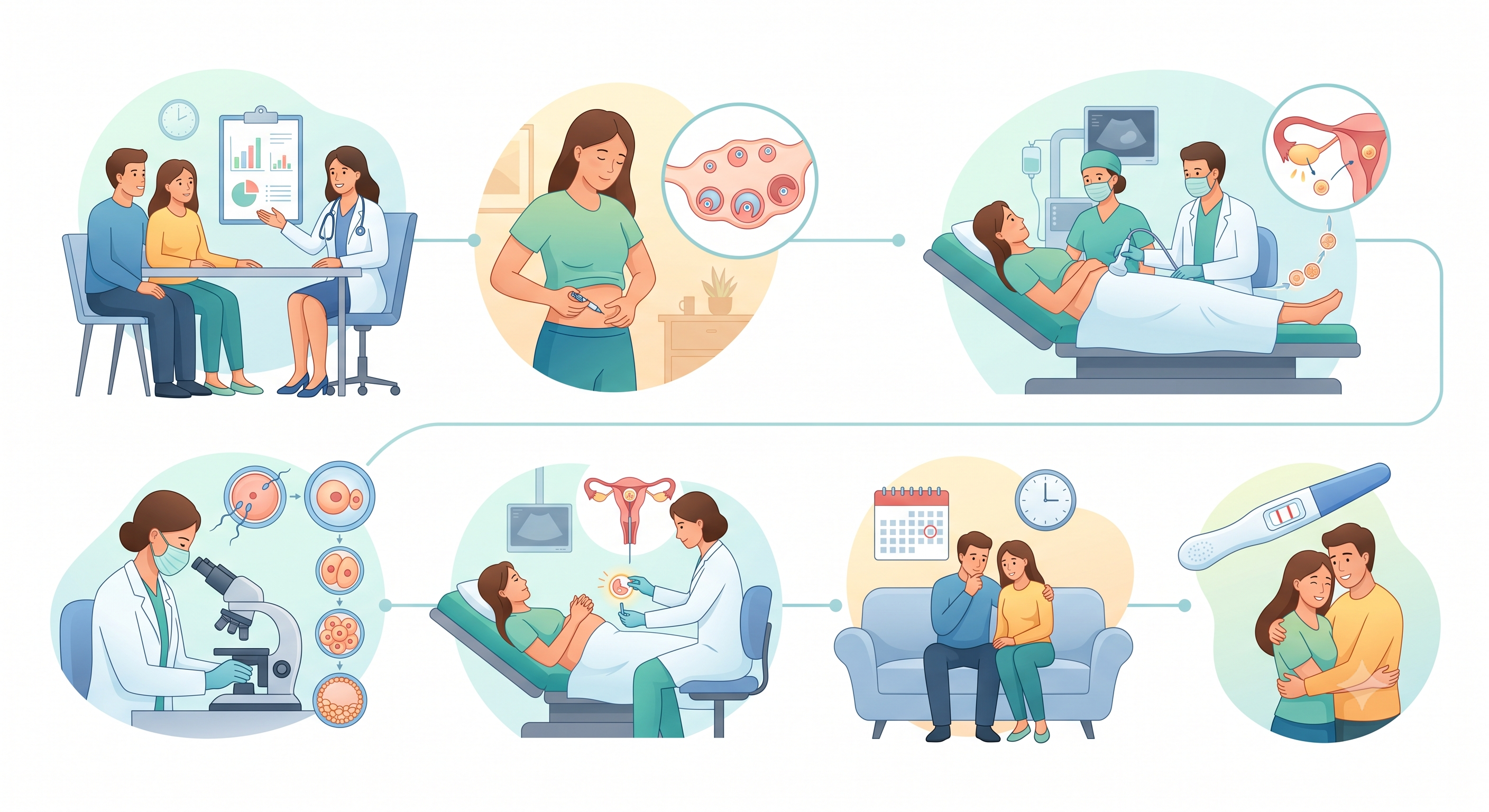
The first IVF cycle involves several important steps, including fertility assessment, ovarian stimulation, egg retrieval, fertilisation, embryo development, embryo transfer, and pregnancy testing. Understanding each stage can help you approach treatment with better preparation and realistic expectations.
Every fertility journey is unique, and the right treatment plan depends on your health, medical history, and fertility needs. If you are considering IVF Treatment in Mumbai, consulting an experienced fertility specialist can help you understand your options and make informed decisions.
With proper guidance, personalised care, and support from your fertility team at Life Fertility Centre, you can take each step of your IVF journey with greater confidence.
Ready to Begin Your IVF Journey?
Book a consultation with the fertility experts at Life Fertility Centre for personalized IVF treatment guidance in Mumbai.
Book Consultation