- Fertility & Women’s Wellness
- +91-9082745079
- lifefertilitycentre.nh@gmail.com

Fertility TreatmentsMale Infertility Treatment in Mumbai
Male Infertility Evaluation & Treatment in Mumbai – Expert Fertility Care for Men
Difficulty conceiving is not always related to female fertility. Male reproductive health plays an equally important role in achieving pregnancy, and identifying potential male fertility concerns early can help couples make informed treatment decisions.
At Life Fertility Centre, South Mumbai, Dr. Katha Desai provides comprehensive fertility evaluation and individualised treatment planning for couples experiencing difficulty conceiving. Male fertility assessments may include semen analysis, hormonal investigations, sperm DNA fragmentation testing and evaluation for conditions affecting sperm production or transport.
Whether you are concerned about low sperm count, poor sperm motility, abnormal sperm morphology or azoospermia (absence of sperm in semen), understanding the underlying cause is the first step towards identifying appropriate treatment options.
Male infertility is a medical condition, not a reflection of masculinity, sexual performance or personal worth.
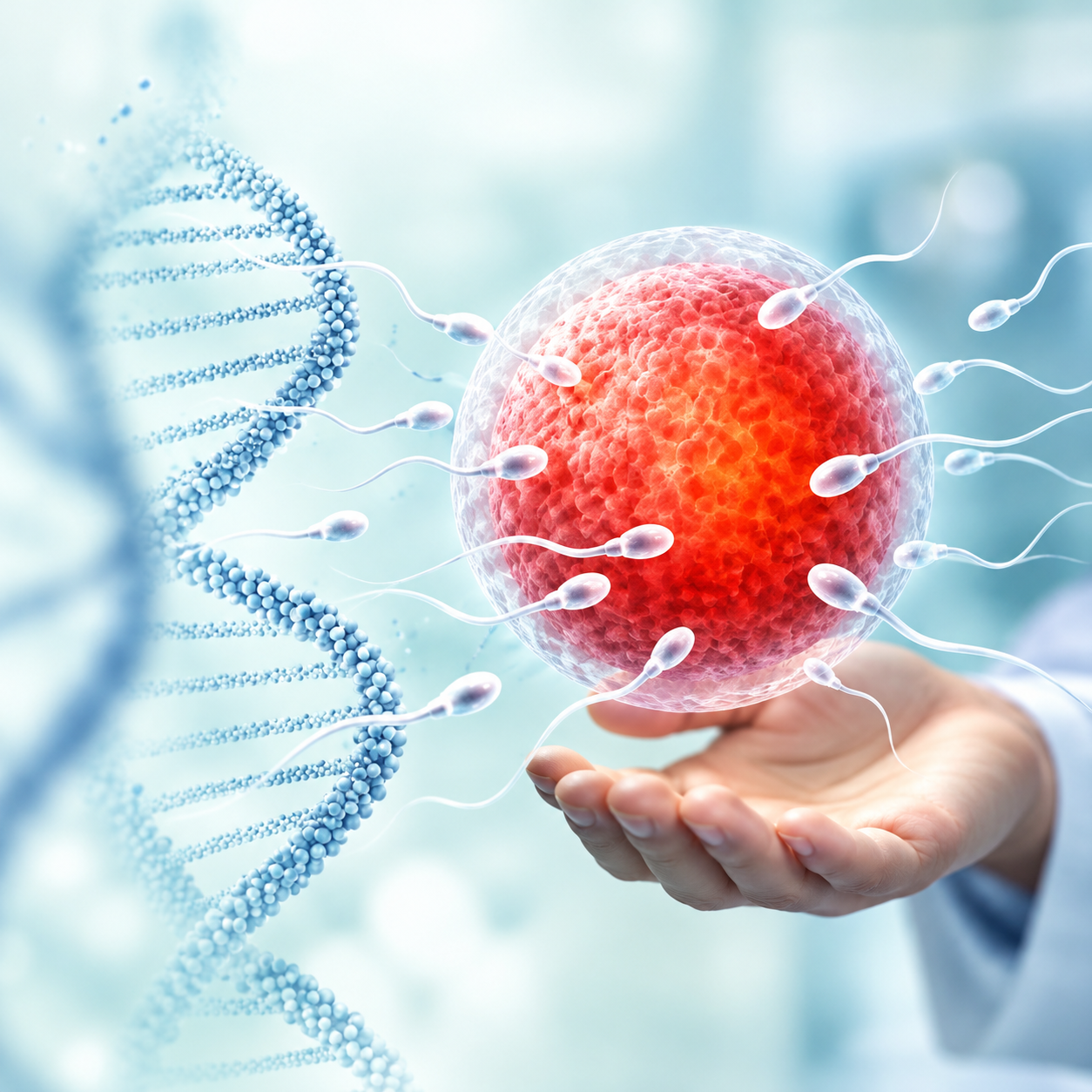
What Is Male Infertility?
Male infertility refers to a man's reduced ability to contribute to achieving pregnancy because of problems involving sperm production, sperm function, sperm delivery or other reproductive factors.
Infertility is generally defined as the inability to achieve pregnancy after 12 months of regular, unprotected sexual intercourse. Earlier evaluation may be appropriate when there are known reproductive concerns, the female partner is aged 35 years or older, or other clinical factors are present.
Male fertility problems may occur even when a man has normal sexual desire, erections and ejaculation.
Some conditions are temporary or treatable, while others may require assisted reproductive techniques such as IVF with intracytoplasmic sperm injection (ICSI).
How Common Is Male Infertility?
Male factors contribute to approximately 40–50% of couples experiencing infertility, either independently or alongside female reproductive factors.
This does not mean that 40–50% of men are infertile. Rather, male reproductive factors are involved in a substantial proportion of couples who experience difficulty conceiving.
Both partners should ideally undergo fertility evaluation at the same time.
Why Is Early Male Fertility Evaluation Important?
A timely assessment may help:
- Identify potentially reversible causes of infertility
- Avoid unnecessary delays in fertility treatment
- Detect hormonal or reproductive health conditions
- Determine whether medical or surgical treatment is appropriate
- Guide decisions about IUI, IVF or ICSI
- Reduce repeated unsuccessful treatment attempts caused by unrecognised male factors
A normal sexual life does not necessarily indicate normal sperm quality.
What Are the Common Causes of Male Infertility?
Male infertility may result from problems with sperm production, sperm movement, sperm structure, hormonal regulation or the reproductive tract.
1. Low Sperm Count (Oligospermia)
Oligospermia refers to a sperm concentration below the laboratory's reference range.
A reduced sperm count may lower the probability of natural conception, although pregnancy can still occur in some cases.
Possible contributing factors include varicocele, hormonal disorders, genetic conditions, testicular injury, medication effects and certain lifestyle exposures.
2. Poor Sperm Motility (Asthenospermia)
Sperm motility describes the ability of sperm to move.
Progressively motile sperm are important because they must travel through the female reproductive tract to reach the egg.
Reduced motility may be associated with oxidative stress, varicocele, infections or other reproductive conditions.
3. Abnormal Sperm Morphology (Teratospermia)
Sperm morphology refers to the size and shape of sperm.
A high proportion of abnormally shaped sperm may be associated with reduced fertility potential. However, morphology alone does not reliably determine whether natural conception is possible.
4. Azoospermia – No Sperm in Semen
Azoospermia occurs when no sperm are identified in the ejaculate after appropriate laboratory examination.
There are two major categories:
Obstructive azoospermia: Sperm production may be preserved, but a blockage prevents sperm from entering the ejaculate.
Non-obstructive azoospermia: Sperm production within the testes is severely impaired or absent.
Distinguishing between these conditions is essential because treatment options differ considerably.
5. Varicocele
A varicocele is an enlargement of veins within the scrotum.
It may affect testicular function, sperm production and sperm quality in some men.
Not every varicocele requires treatment. The decision depends on physical examination findings, semen parameters, fertility history and other clinical considerations.
6. Hormonal Imbalances
Hormones such as follicle-stimulating hormone (FSH), luteinising hormone (LH) and testosterone regulate male reproductive function.
Conditions affecting the hypothalamus, pituitary gland or testes may interfere with sperm production.
7. Lifestyle and Environmental Factors
Factors that may influence sperm health include:
- Smoking and tobacco exposure
- Excessive alcohol consumption
- Obesity and metabolic disorders
- Anabolic steroid or testosterone use
- Exposure to excessive heat or certain occupational toxins
- Poor sleep and chronic stress
- Certain medications and untreated medical conditions
Lifestyle factors may contribute to reduced sperm quality, but they do not explain every case of male infertility.
Symptoms and Signs of Male Infertility
Many men with infertility have no obvious symptoms.
The most common indication is difficulty achieving pregnancy despite regular, unprotected intercourse.
Other possible signs include:
- Reduced sexual desire
- Erectile or ejaculatory difficulties
- Pain, swelling or a lump in the testicular region
- Previous testicular injury or surgery
- History of undescended testes
- Reduced testicular size
- Hormonal symptoms such as reduced body hair or breast enlargement
These symptoms do not necessarily indicate infertility, but they may justify medical evaluation.
How Is Male Infertility Diagnosed?
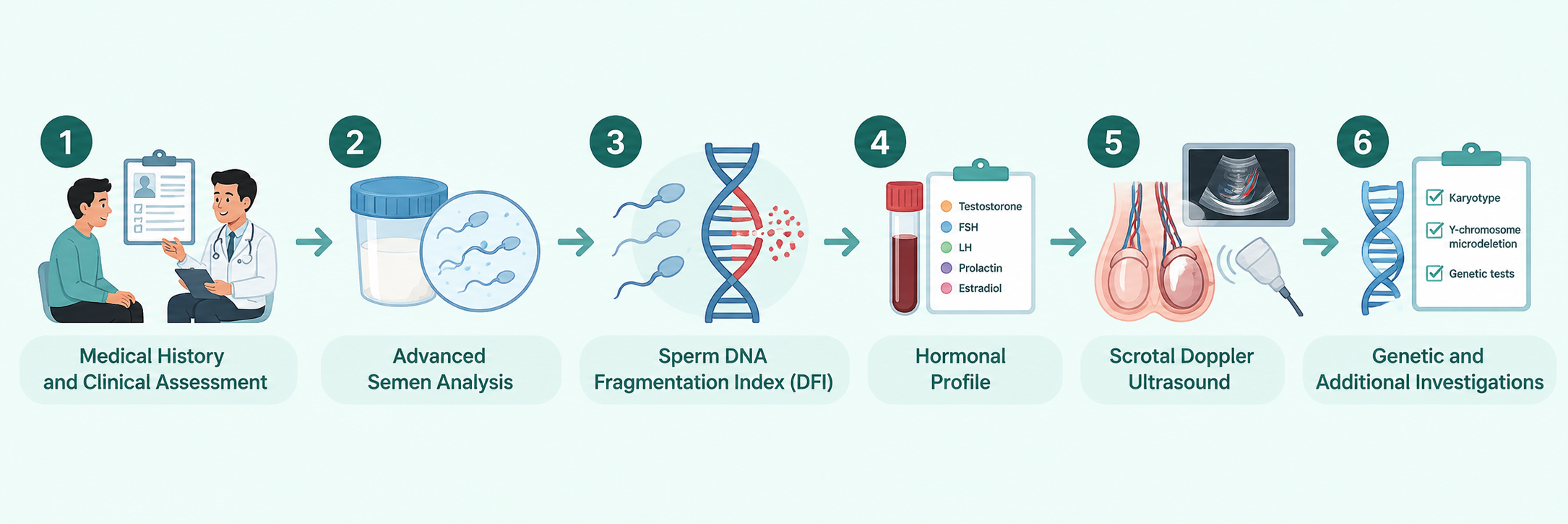
At Life Fertility Centre, male fertility evaluation begins with a detailed review of reproductive history and appropriate investigations.
The purpose is not simply to identify an abnormal semen report, but to understand the possible underlying cause and its relevance to conception.
Step 1: Medical History and Clinical Assessment
The fertility specialist reviews previous pregnancies, duration of infertility, sexual and reproductive history, medications, surgeries, lifestyle exposures and relevant medical conditions.
A physical examination by an appropriately trained clinician or andrologist may be recommended.
Step 2: Advanced Semen Analysis
Semen analysis is usually the first laboratory investigation for male infertility.
It evaluates sperm concentration, motility, morphology, semen volume and other characteristics.
WHO Semen Analysis Reference Values
The WHO Laboratory Manual, Sixth Edition (2021), provides the following approximate lower fifth-percentile reference values from fertile populations:
| Semen parameter | WHO lower reference value |
|---|---|
| Semen volume | 1.4 mL |
| Sperm concentration | 16 million/mL |
| Total sperm number | 39 million per ejaculate |
| Total motility | 42% |
| Progressive motility | 30% |
| Normal morphology | 4% |
| Vitality | 54% |
These are reference limits, not strict boundaries between fertility and infertility.
A result below a reference value does not automatically mean a man cannot conceive. Likewise, results within the reference range do not guarantee fertility.
Semen parameters can fluctuate. When results are abnormal, repeat testing may be advised, generally after an appropriate interval.
Step 3: Sperm DNA Fragmentation Index (DFI)
Sperm DNA fragmentation testing assesses damage to genetic material within sperm.
Elevated DNA fragmentation has been associated with certain adverse reproductive outcomes, but its clinical interpretation depends on the testing method and patient circumstances.
DFI testing is not recommended routinely for every man during an initial infertility evaluation.
It may be considered in selected situations, such as recurrent pregnancy loss or particular unexplained fertility problems, after specialist assessment.
Step 4: Hormonal Profile
Hormonal testing may include:
- FSH
- LH
- Total testosterone
- Prolactin, when indicated
- Estradiol or thyroid investigations in selected cases
These tests help identify possible hormonal causes of impaired sperm production.
Step 5: Scrotal Doppler Ultrasound
A scrotal Doppler ultrasound may be recommended when clinical findings suggest a varicocele or another structural abnormality.
It is not routinely necessary for every patient undergoing an initial male infertility assessment.
Step 6: Genetic and Additional Investigations
In selected cases, particularly severe oligospermia or azoospermia, genetic investigations may be recommended.
These may include karyotyping, Y-chromosome microdeletion testing or CFTR-related testing when clinically indicated.
Male Infertility Treatment Options in Mumbai
Treatment depends on the underlying diagnosis, reproductive goals, female partner's fertility status and previous treatment history.
1. Medical Treatment and Lifestyle Optimisation
Hormonal treatment may be appropriate for specific endocrine conditions. Lifestyle modifications can address smoking, weight, alcohol intake and harmful exposures. Antioxidant supplements have uncertain clinical benefits and should not be presented as a guaranteed way to improve fertility.
2. Varicocele Treatment
Varicocelectomy may be considered for selected infertile men with a palpable varicocele and abnormal semen parameters. The procedure aims to correct abnormal venous drainage and may improve semen quality in suitable cases.
3. IVF with Intracytoplasmic Sperm Injection (ICSI)
ICSI involves injecting a single sperm directly into a mature egg in the IVF laboratory. It may be recommended for severe male-factor infertility, very low sperm count, significantly impaired motility or certain previous fertilisation problems.
4. Intracytoplasmic Morphologically Selected Sperm Injection (IMSI)
IMSI uses high-magnification microscopy to select sperm based on detailed morphology before injection. It may be discussed in selected cases, but routine use has not been proven to improve live birth outcomes compared with conventional ICSI.
5. Surgical Sperm Retrieval
Men with azoospermia may require sperm retrieval procedures, depending on the cause. Options include PESA, TESA and micro-TESE, performed by appropriately trained specialists.
PESA, TESA and Micro-TESE: Understanding Surgical Sperm Retrieval
Surgical sperm retrieval techniques are used when sperm are absent from the ejaculate or cannot be obtained through conventional methods.
| Procedure | Full form | Typical clinical use |
|---|---|---|
| PESA | Percutaneous Epididymal Sperm Aspiration | Selected cases of obstructive azoospermia |
| TESA | Testicular Sperm Aspiration | Selected obstructive cases and other situations based on specialist assessment |
| Micro-TESE | Microsurgical Testicular Sperm Extraction | Selected cases of non-obstructive azoospermia |
PESA
PESA involves collecting sperm from the epididymis using a fine needle.
It may be appropriate when sperm production is preserved but sperm transport is obstructed.
TESA
TESA involves obtaining sperm directly from testicular tissue using needle aspiration.
The suitability of this procedure depends on the underlying diagnosis.
Micro-TESE
Micro-TESE uses an operating microscope to identify and retrieve small areas of testicular tissue that may contain sperm.
It is an important option for selected men with non-obstructive azoospermia.
However, sperm retrieval is not guaranteed, and some genetic findings may indicate a very low or absent likelihood of successful retrieval.
When sperm are successfully retrieved, they may be used for ICSI, depending on laboratory assessment and the couple's treatment plan.
Can Low Sperm Count Be Treated Naturally?
Some men may experience improvements in semen parameters after addressing modifiable health and lifestyle factors.
Potential measures include maintaining a healthy weight, avoiding tobacco and anabolic steroids, limiting alcohol, improving sleep, exercising regularly and managing underlying medical conditions.
Because sperm development takes approximately two to three months, changes in semen parameters may not be apparent immediately.
However, lifestyle changes cannot reliably reverse all causes of male infertility, including significant genetic disorders or certain forms of testicular failure.
Medical evaluation is important before relying on supplements or home remedies.
How Successful Is Male Infertility Treatment?
Treatment outcomes depend on the cause and severity of infertility.
For some men, correcting a hormonal disorder or treating an appropriate varicocele may improve reproductive potential.
For others, assisted reproductive technologies such as IVF-ICSI may provide a pathway to pregnancy.
ICSI can help overcome certain fertilisation barriers, but it cannot correct every underlying sperm or embryo abnormality.
Important factors affecting treatment outcomes include:
- Female partner's age and ovarian reserve
- Egg and embryo quality
- Sperm availability and function
- Underlying male infertility diagnosis
- Genetic and reproductive health factors
- Laboratory and treatment protocols
No treatment can guarantee sperm retrieval, fertilisation, implantation or live birth. Individualised counselling is essential.
Why Choose Life Fertility Centre for Male Infertility Evaluation in Mumbai?
Couple-Centric Fertility Assessment
Male and female reproductive factors are evaluated together, helping avoid delays caused by investigating only one partner.
Individualised Treatment Recommendations
Investigations and treatment options are selected according to clinical findings rather than applying the same fertility package to every patient.
Advanced Assisted Reproductive Options
When appropriate, patients may be counselled about IVF, ICSI and specialist referral for surgical sperm retrieval.
Confidential and Respectful Consultations
Male infertility concerns are discussed sensitively, without blame or judgement, with attention to patient privacy.
Convenient Location in South Mumbai
Life Fertility Centre is located at Nirmala Maternity & Surgical Hospital, providing access to fertility consultations for patients in South Mumbai and surrounding areas.
Dr. Katha Desai – Fertility Specialist in South Mumbai
MBBS, MS (Obstetrics & Gynaecology), DNB (Obstetrics & Gynaecology)
Fellowship in Reproductive Medicine | Advanced Diploma in Reproductive Medicine, Kiel, Germany
Dr. Katha Desai leads Life Fertility Centre at Nirmala Maternity & Surgical Hospital, South Mumbai.
Her specialised training in reproductive medicine, including advanced education in Germany, supports a comprehensive approach to infertility evaluation and assisted reproductive treatment.
She has contributed to FOGSI clinical manuals and is an active member of the Mumbai Obstetric & Gynaecological Society (MOGS).

Her approach emphasises evaluating both partners, understanding the underlying causes of infertility and recommending treatments according to individual reproductive needs.
For male conditions requiring specialised urological assessment or surgery, coordinated care with an appropriately qualified andrologist or reproductive urologist may be necessary.
Male Infertility Treatment Cost in Mumbai
The cost of male infertility evaluation and treatment in Mumbai varies depending on the investigations required, underlying diagnosis and treatment approach.
Indicative Diagnostic and Treatment Costs
Broad private-sector planning estimates, not verified Life Fertility Centre prices. Actual charges vary by provider, testing method and treatment inclusions.
| Investigation or treatment | Indicative cost in Mumbai |
|---|---|
| Basic semen analysis | ₹500–₹1,500 |
| Advanced semen analysis | ₹1,000–₹3,000 |
| Sperm DNA fragmentation test | ₹4,000–₹10,000 |
| Hormonal profile | ₹2,000–₹6,000 |
| Scrotal Doppler ultrasound | ₹1,500–₹3,500 |
| IVF with ICSI | ₹1.5–₹3 lakh or more |
| Surgical sperm retrieval | Varies substantially by technique and facility |
What Affects the Total Treatment Cost?
- Number and type of diagnostic investigations
- Need for hormonal or medical treatment
- Requirement for varicocele surgery
- IVF and ICSI laboratory procedures
- Need for PESA, TESA or micro-TESE
- Medications, anaesthesia and laboratory charges
- Additional embryo freezing or storage services
Patients should request an itemised quotation before beginning treatment.
For an accurate semen analysis test cost in Mumbai or a personalised treatment estimate, consult Life Fertility Centre.
Frequently Asked Questions About Male Infertility
Can a man with a low sperm count become a father?
What is the best test to diagnose male infertility?
Can azoospermia be treated?
Does ICSI guarantee pregnancy in male infertility cases?
How much does male infertility treatment cost in Mumbai?
Take the First Step Towards Understanding Your Fertility
Male infertility is common, and a detailed fertility evaluation can help identify possible causes and suitable treatment options.
At Life Fertility Centre, Dr. Katha Desai offers confidential, personalised fertility consultations and evidence-based guidance to help couples make informed decisions.
Life Fertility Centre
Nirmala Maternity & Surgical Hospital, South Mumbai
- Fertility First Steps - Counselling for Planning Naturally
- Fertility Assessment Tests
- Ovulation Induction
- IUI (Intrauterine Insemination)
- IVF (In Vitro Fertilization)
- ICSI (Intracytoplasmic Sperm Injection)
- FET (Frozen Embryo Transfer)
- Donor Oocyte And Embryo Programs
- Fertility Preservation
- LAH, Blastocyst Culture
- Genetic Screening
- TESA/ PESA